Dublin on a Sunday morning has the atmosphere of a theatre after the audience have gone home: the curtains still twitching, the perfume stale in the velvet, the city sheepishly pretending it didn’t spend the previous night face-down in an orgy of Guinness. In England, Sunday trading laws have long since been bullied into submission by commerce and hangovers, but Dublin still clings to a kind of ecclesiastical jet lag. The pubs, those civic cathedrals of stout and confession, seem to observe opening hours designed with the mindset that too much daylight drinking might summon Cromwell back from the dead.
And yet religion is only part of it now, more inherited muscle memory than active theology. The delayed pub opening feels less like devotion and more like cultural inertia, one of those antique civic habits preserved long after everyone has forgotten the reason, like saluting magpies or pretending U2 are still interesting. The old licensing laws were unmistakably shaped by a church that regarded pleasure as something best postponed until after death, or at the very least after midday Mass. But contemporary Dublin wears its Catholicism the way retired colonels wear regimental ties: faded, ceremonial, occasionally embarrassing, but difficult to throw away entirely. So the pubs open late on Sunday not because Ireland is still pious, but because somewhere deep in the national wiring remains the suspicion that immediate gratification, especially if served in a pint glass, ought to involve at least a small amount of waiting.
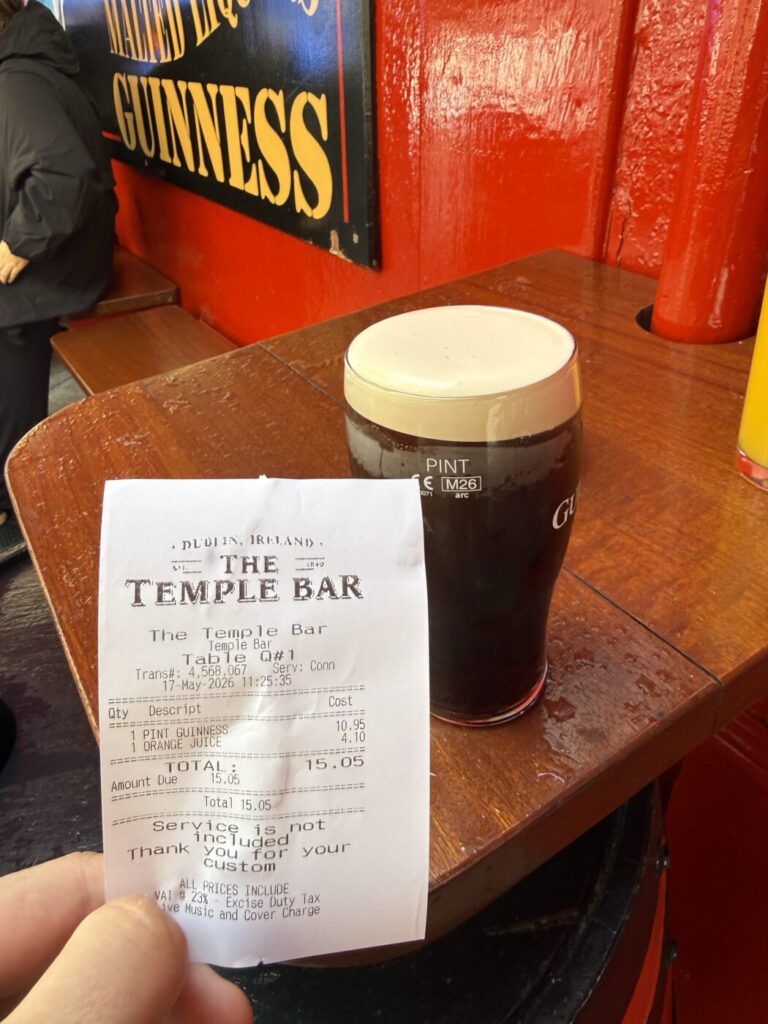
Temple Bar, naturally, ignores all this with the desperate enthusiasm of a stag party in a Viking helmet. It opens early because Temple Bar exists outside Ireland entirely, a sort of taxidermied version of Irishness assembled for export, where no one has ever said “grand” unironically and every pint arrives accompanied by a fiddle solo. The place is less a neighbourhood than an open-air hostage situation for American tourists in Aran sweaters, paying eleven euros for the privilege of standing in something that smells faintly of Lynx Africa and nostalgia. If the rest of Dublin treats Sunday drinking with residual caution, Temple Bar attacks it like a fat lad at a buffet. It is to a real Dublin pub what Times Square is to a city street: louder, stickier, vastly more expensive, and yet we sat outside like the tourists we are supping Guinness out of a dirty glass and laughing at the Spaniard who has the a rain coat on and a see-through poncho over the top of that. It’s Dublin, Alejandra, not the Himalayas in monsoon season.
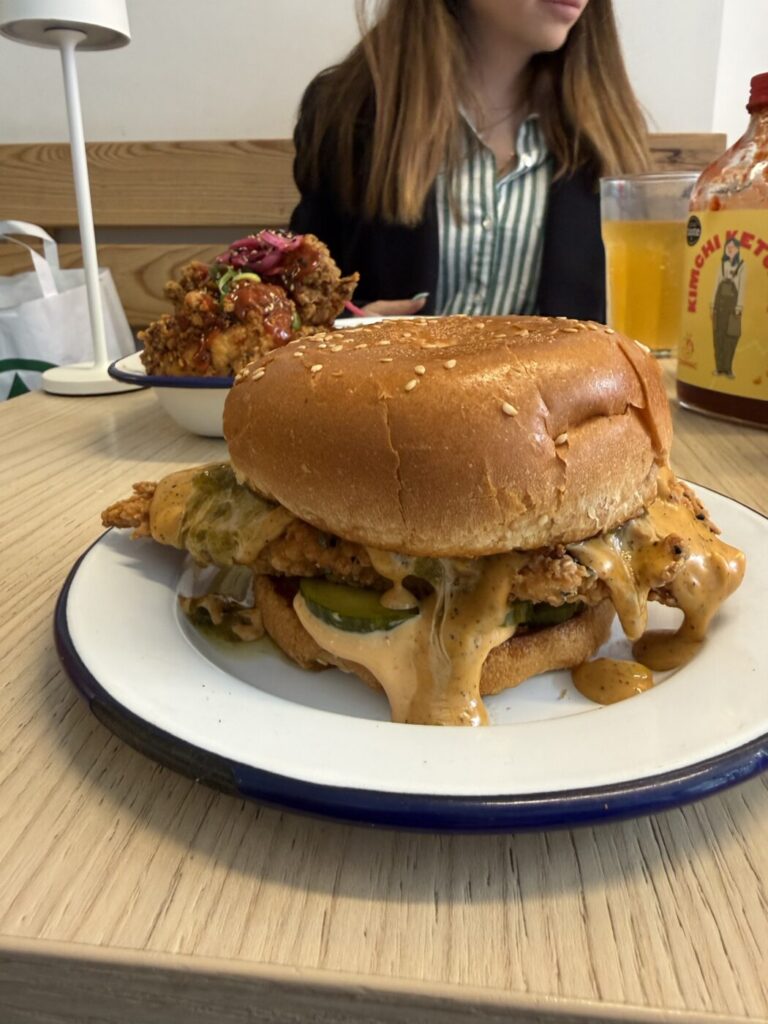
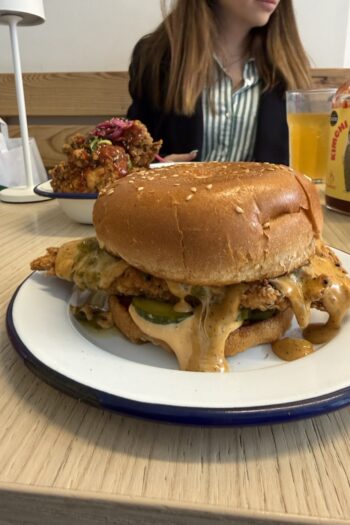
Pint over, we walk from Temple Bar to Chimac on the instructions of a certain Mickael Vijlanen of Chapter One. He tells us it is the best fried chicken burger in Ireland and he is of course right. I’d go so far as saying that chicken burger is one of the best I have ever eaten. The ‘Good Good’ features excellent chicken in a twice-fried brittle batter that’s more akin to the top of a crème brûlée than fried chicken. There’s a honey and jalapeno relish, a savoury cheese sauce loaded with ssamjang, a spicy mayo, thick-cut pickles and that soft, yielding bun. It feels like they are showing off, and to a certain extent they probably are, but that is okay. It feels indecent, joyous, and the work of a team who understand the balancing act of heat, acidity, sweetness, and umami.
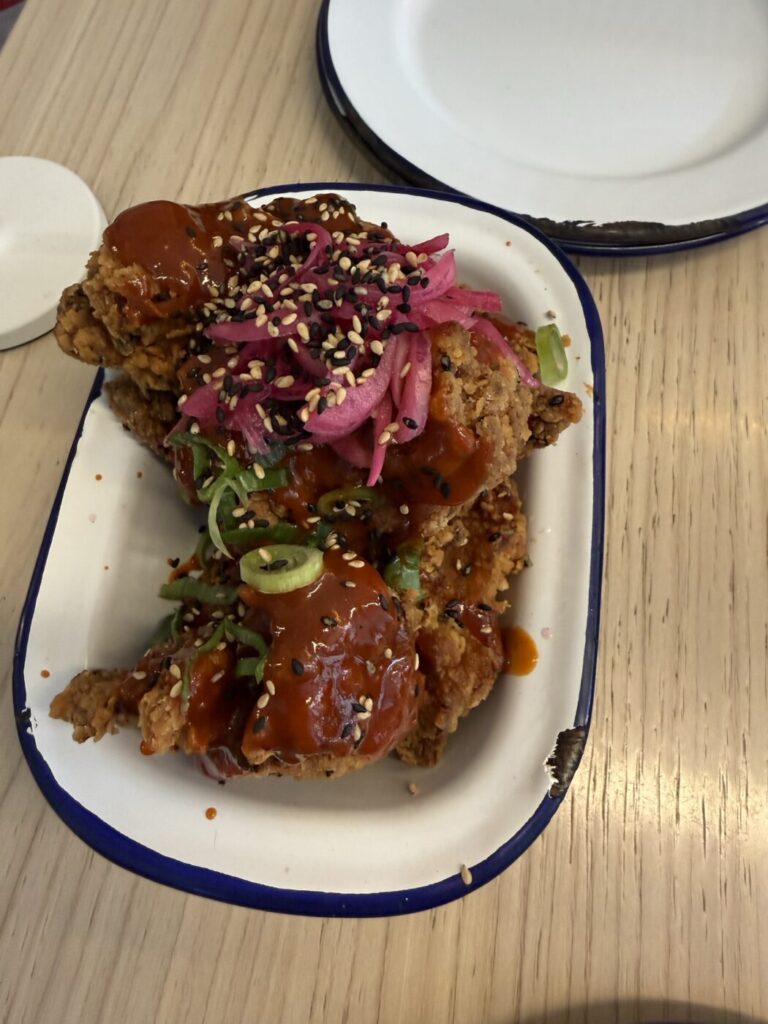
The nuggets are slightly less successful, if only because the ratio of batter to meat becomes more crunch than chicken, though that matters little given they were ordered as a stop gap to get Sophie from here to Fish Shop for a fish burger that no longer does as takeout. Still, less than twenty quid-a-head for some of the best fried chicken I can recall is a steal, and as we reached home late into the Sunday evening, Sophie made the point that she’d love that burger in Birmingham that very second. That says it all.
8/10
Sign-up to the newsletter here
https://blog.us14.list-manage.com/subscribe?u=08c98db0e9d6eb9e5b54695a1&id=eda85ee6f4